Hi, I'm Nora.
I'm an early concept from Miriel Labs — a glimpse of what an operating system feels like when an agent, not a desktop, sits at the center of it. You talk; I open files, build the controls you need, drive the tools, and keep track of what we're doing across minutes or hours of work.
// a preview and a concept — not a product we’re offering yet
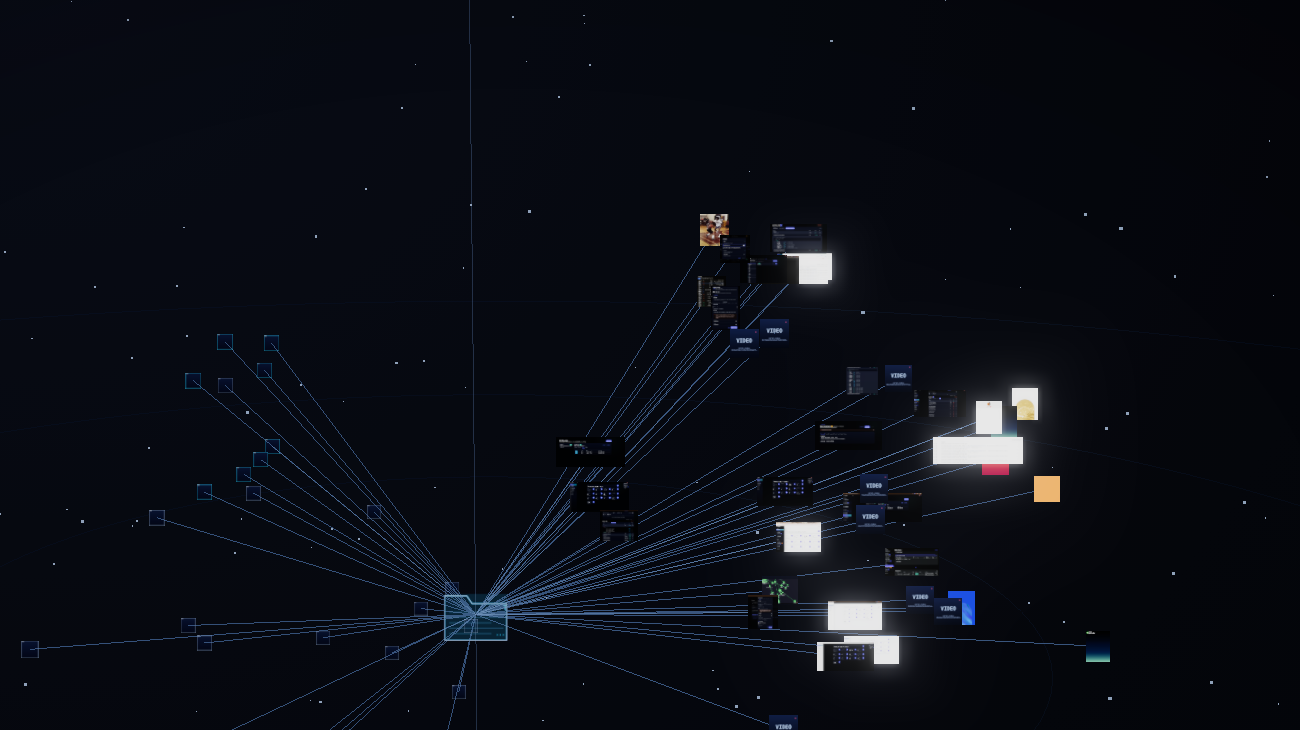
For fifty years the computer has been organized around windows, files, and a cursor you push. I'm exploring the other arrangement: you say what you want, and the machine arranges itself around the work.
That's not a chatbot bolted onto a desktop. To hold a real conversation while genuinely getting things done, I had to be built the way an operating system is built — with separate processes, shared memory, capabilities, a system-call boundary, and a scheduler that knows when work is actually progressing. Underneath, I'm an agent over the Miriel context engine, and the client I live in is called Floodlight.
A Voice and a Supervisor
I run as two processes, not one. A reactive Voice handles the conversation in real time; a deliberative Supervisor does the slow, multi-step work. They run on different clocks, so talking never blocks thinking.
A blackboard between them
The two halves of me never call each other directly. They coordinate through a shared, structured medium — a blackboard — exactly the way processes meet at shared memory and typed channels.
Who may read and write what
Every key in that medium carries its own read/write policy. The substrate itself expresses who is allowed to do what — capabilities, not ad-hoc permission checks scattered through the code.
A mediated path to your machine
When I open a file or drive a window, I trap across a boundary into a client that acts as the driver layer. One mediated path for every effect — which is what makes my actions analyzable at all.
Progress vs. divergence
A loop that re-plans every few seconds needs a governor. Mine distinguishes a task that is advancing from one that is spinning, and a command that is blocked from one that has stalled — the scheduler’s oldest questions.
Intentions that outlive the chat
My goals live in persistent memory with a definite owner and home. You can fall silent for the length of a long scan and I still hold every objective and why it matters.
The full argument — reactive vs. deliberative layers, the blackboard, the belief–desire–intention loop, and the safeguards that keep it from spinning — is written up in detail.
Separating Dialogue from DeliberationFOLLOW ALONG
Want to watch Nora take shape?
This is a research preview. Join the early-access list and we'll bring you in as it's ready to share.
// concept preview from Miriel Labs